
Ideas for better growth
The Post-Purchase Experience Checklist
Chris Content · · 4 min read
The period between payment and delivery decides repeat purchases and support volume. What to send, when, and how to handle delays without losing the customer.
Most stores optimise everything up to the payment button and nothing after it. Yet the period between payment and delivery generates the majority of support contacts, most negative reviews, and every decision about whether the customer buys again.
It is also the cheapest part of the experience to improve, because it is mostly communication.
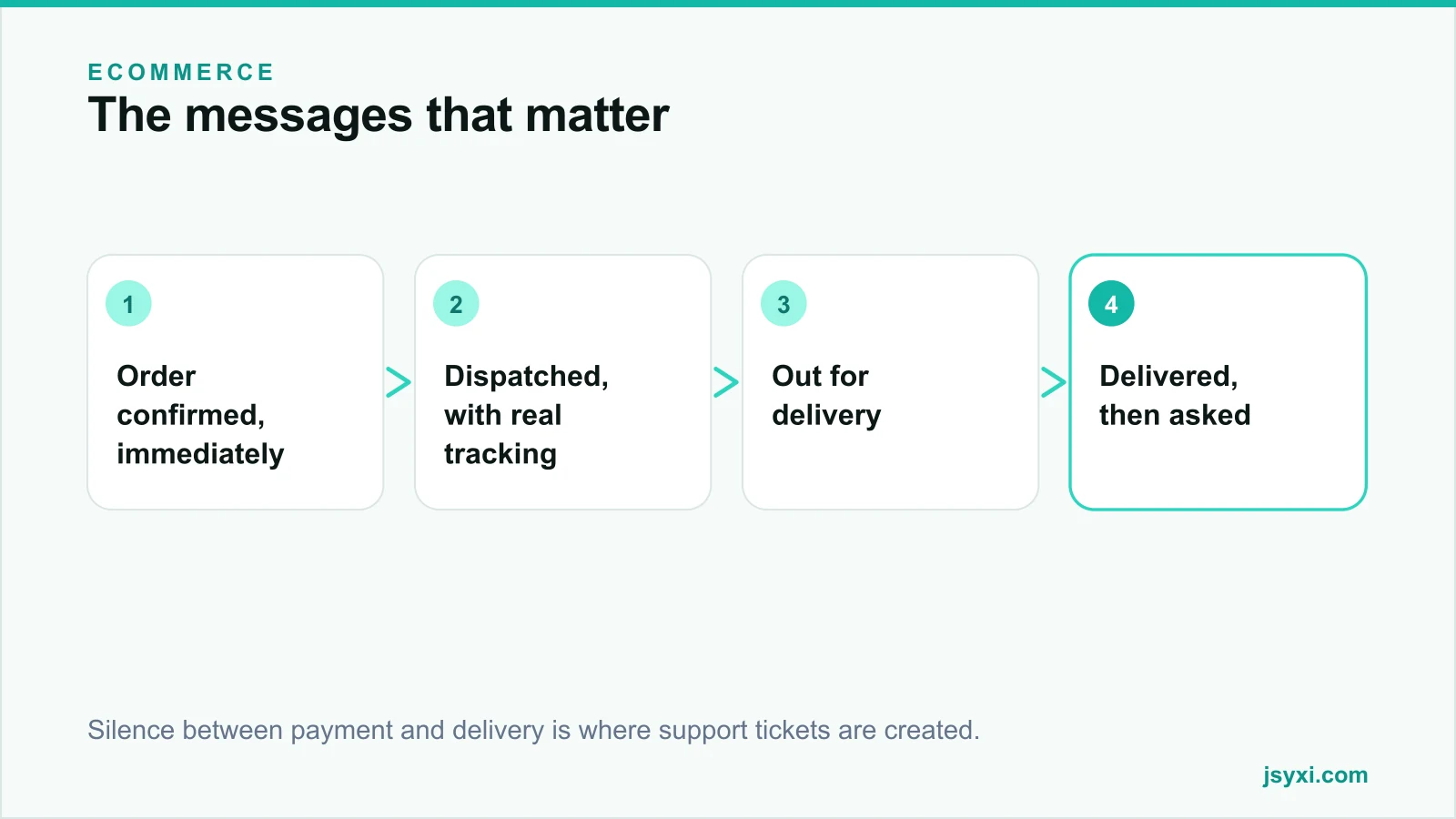
The four messages that must exist
1. Order confirmation - immediately
Sent within seconds, on the channel the customer used:
- Order number, prominent
- Items, variants, quantities, and the total paid
- Delivery address as entered, so mistakes are caught while they can still be fixed
- Estimated delivery date, not a vague range
- A tracking route that does not require an account
- A support route and the return window
A confirmation that arrives an hour later has already generated a "did my order go through" message.
2. Dispatch notice - when it actually ships
- Confirmation that it is on its way
- A tracking link that works when sent, not one that shows nothing for a day
- The courier name
- Updated delivery estimate
- What to do if nobody is home
3. Out for delivery - on the day
- A same-day heads-up so someone is available
- The payable amount for cash on delivery, restated
- A reschedule route
- The delivery agent's contact route where the courier provides one
This single message materially reduces failed deliveries - see reducing RTO and COD losses.
4. Delivered - then ask
- Confirmation it was delivered
- How to start a return, plainly
- Care or setup instructions where relevant
- A review request, timed after they have actually used the product
Handle delays before the customer notices
Delays are inevitable. Silence is what turns them into complaints.
- Notify proactively as soon as you know, not when the promised date passes
- Say what happened in one honest line
- Give a new date you are confident about
- Offer a choice: wait, cancel, or swap
- Do not send a cheerful marketing email to someone whose order is late
A customer told about a delay before they noticed usually stays. One who discovers it themselves usually does not.
Make tracking actually work
- Every order page reachable without a login
- Status in customer language: "Packed", "With courier", "Out for delivery" - not internal codes
- A visible last-updated timestamp
- A support route on the same page
- No dead-end "no information available" states without an explanation
Time the review request correctly
- After the product has been used, not on delivery day - a few days for consumables, longer for durables
- One request, one reminder at most
- Make it one tap, with the product pre-selected
- Never incentivise a positive review; ask for an honest one
- Route unhappy responses to support before they become public
See how to get more Google reviews and our guide to collecting product reviews.
Set up the returns path properly
The return experience is the strongest predictor of whether someone orders again:
- One obvious route to start a return, linked from the delivery message
- Acknowledgement within one working day
- Status updates while it is in transit
- Refund on receipt and check, not at month end
Our return policy guide covers the terms themselves.
Then, and only then, market
Once the order has arrived and the return window has passed:
- A genuinely relevant accessory or refill suggestion
- A replenishment reminder timed to consumption
- An invitation to a loyalty programme
- Content that helps them use what they bought
Marketing sent while an order is late or a return is unresolved is the fastest way to an unsubscribe.
Measure the right things
- Support contacts per hundred orders, by topic
- "Where is my order" contacts as a share of the total - this is the metric that reveals communication gaps
- On-time delivery against the date you promised, not the courier's
- Review submission rate
- Repeat purchase rate within 90 days
Common mistakes to avoid
- No dispatch notice. The customer assumes nothing happened.
- Tracking links that show nothing for a day. Worse than no link.
- Reacting to delays instead of announcing them.
- Review requests on delivery day. They have not used it yet.
- Marketing to a customer with an open complaint.
Frequently asked questions
What emails should be sent after an order?
Four: immediate confirmation, dispatch with working tracking, out-for-delivery on the day, and delivered with return instructions and a later review request.
How do I reduce "where is my order" support contacts?
Send proactive dispatch and out-for-delivery messages, provide tracking that works without a login and uses plain status language, and announce delays before the promised date passes.
When should I ask for a review?
After the customer has actually used the product - a few days for consumables, a week or more for durables. One request and at most one reminder.
What should I do when an order is delayed?
Tell the customer as soon as you know, explain briefly, give a new date you are confident about, and offer the choice to wait, cancel, or swap. Do not wait for them to ask.
Next steps
Place a test order through your own store and record every message you receive and when. The gaps in that timeline are your support volume.
Start free and publish your delivery and returns answers where buyers ask them.